
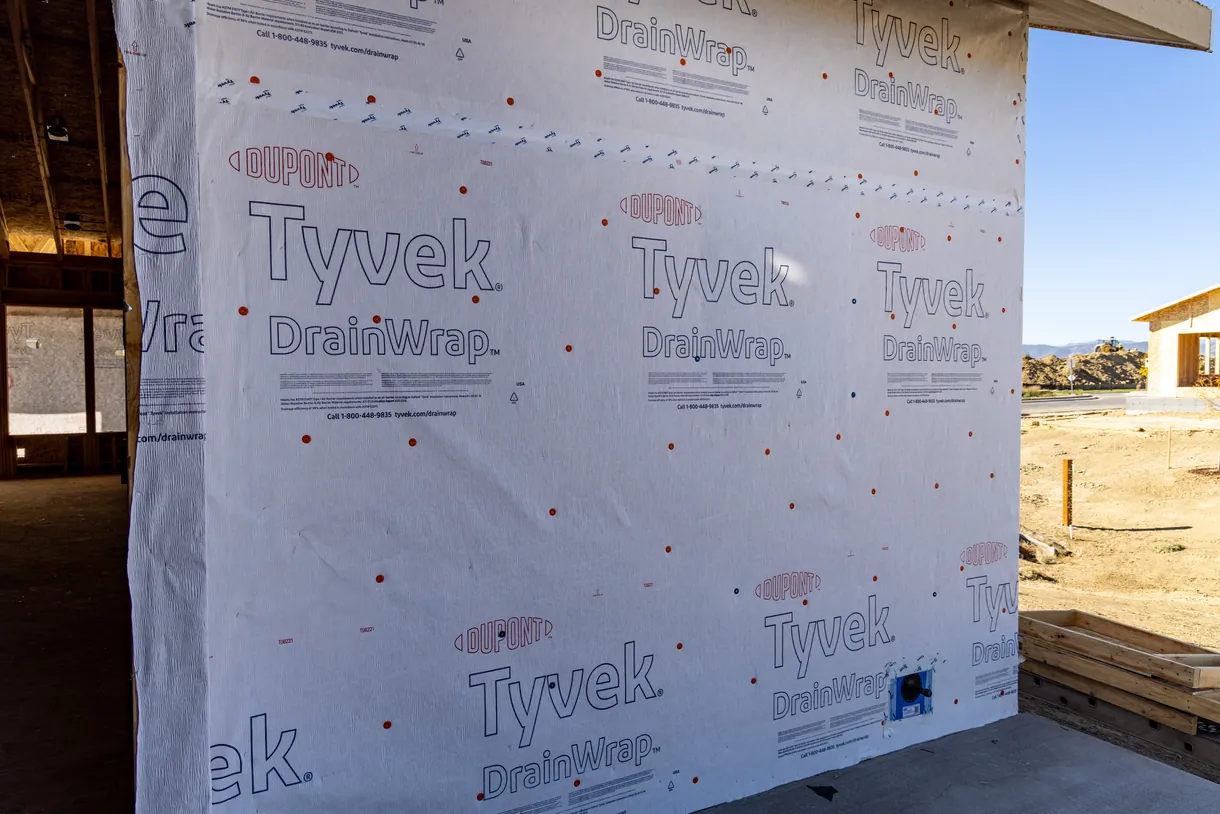
As building codes continue to evolve, one thing has become clear: managing water behind exterior cladding is critical to the long-term performance of residential buildings. Moisture intrusion remains one of the leading causes of wall damage, mold growth, and premature building deterioration. That’s why modern building codes place a strong emphasis on drainage planes and water-resistive barriers (WRBs).
For builders, understanding drainage efficiency and selecting the right WRB can make the difference between a durable wall system and costly callbacks.
What Is a Drainage Plane?
A drainage plane is the layer within a wall assembly designed to direct water down and out of the wall system. Even the best siding, stucco, stone veneer, or masonry cladding allows some water penetration during wind-driven rain events. The drainage plane provides a pathway for that moisture to escape before it can damage the structure.
A properly installed WRB serves as the primary drainage plane, protecting sheathing and framing from moisture while maintaining the wall’s ability to dry.
Recent Building Code Changes Focus on Drainage
The International Residential Code (IRC) and International Building Code (IBC) have strengthened drainage requirements in recent code cycles, particularly for stucco and other absorptive claddings.
Current code provisions recognize that simply stopping water is not enough. Wall systems must also provide a means for water to drain effectively. In many applications, builders must now provide either:
- A drainage space behind the cladding, or
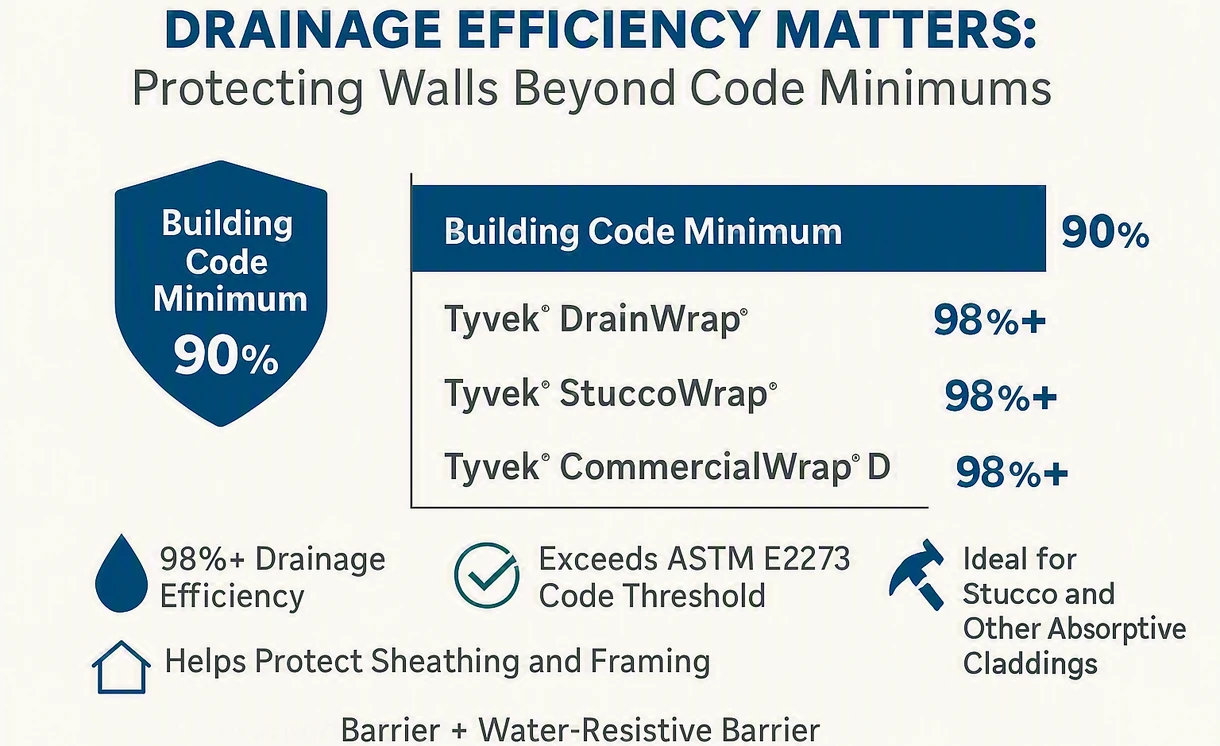
- A drainable WRB that demonstrates a minimum 90% drainage efficiency when tested according to ASTM E2273.
These requirements reflect decades of field experience showing that moisture management is essential for building durability and occupant comfort.
What Is Drainage Efficiency?
Drainage efficiency measures how effectively a WRB allows water to escape from behind exterior cladding.
ASTM E2273 is the industry-standard test used to evaluate drainage performance. Products that achieve higher drainage efficiency remove more water from the wall assembly, reducing the risk of trapped moisture, rot, mold, and material degradation.
For builders, higher drainage efficiency means greater confidence that the wall assembly will perform as intended over time.
Why Tyvek® Drainable WRBs Stand Out
DuPont™ Tyvek® DrainWrap™, StuccoWrap®, and CommercialWrap® D are engineered specifically to provide superior moisture management. According to DuPont testing, these products achieve drainage efficiencies exceeding 98%, significantly surpassing the 90% threshold commonly referenced in code requirements.
The key advantage comes from the engineered drainage channels incorporated into the wraps. These channels create a dedicated pathway for water to move downward and exit the wall assembly rather than becoming trapped behind the cladding.
Key Benefits of Tyvek® Drainable Wraps
Exceptional Moisture Management
With drainage efficiencies greater than 98%, Tyvek® drainable WRBs help remove bulk water quickly and effectively, supporting long-term wall durability.
Code Compliance
Tyvek® drainable products help builders meet drainage requirements for stucco and other moisture-sensitive wall assemblies while simplifying the wall design process.
Air Barrier Performance
In addition to managing water, Tyvek® WRBs help reduce uncontrolled air leakage. Better air control can improve energy efficiency, indoor comfort, and HVAC performance.
Vapor Permeability
Tyvek® products are designed to resist bulk water while allowing water vapor to pass through. This helps wall assemblies dry more effectively when incidental moisture is present.
Jobsite Durability
Tyvek® drainable wraps are lightweight, easy to install, and designed to withstand the demands of residential construction, helping crews maintain productivity without sacrificing performance.
Best Practices for Installation
Even the highest-performing WRB must be installed correctly to deliver its intended benefits.
Builders should:
- Follow manufacturer installation instructions.
- Properly integrate flashing around windows, doors, and penetrations.
- Maintain shingle-style overlaps.
- Ensure drainage channels remain unobstructed.
- Verify continuity of the drainage plane throughout the wall assembly.
Attention to these details helps maximize drainage performance and reduce the likelihood of moisture-related issues.
The Bottom Line
Modern building codes increasingly recognize that effective water management requires more than a traditional weather barrier. Today’s wall assemblies need drainage systems that actively move water out of the wall.
Tyvek® DrainWrap™, StuccoWrap®, and CommercialWrap® D provide proven drainage performance exceeding 98% drainage efficiency, helping builders meet code requirements while delivering better protection against moisture damage.
For builders looking to improve durability, reduce risk, and simplify code compliance, a high-performance drainable WRB is no longer just a best practice—it’s becoming an essential part of modern wall construction.